
EPDM Rubber Flooring
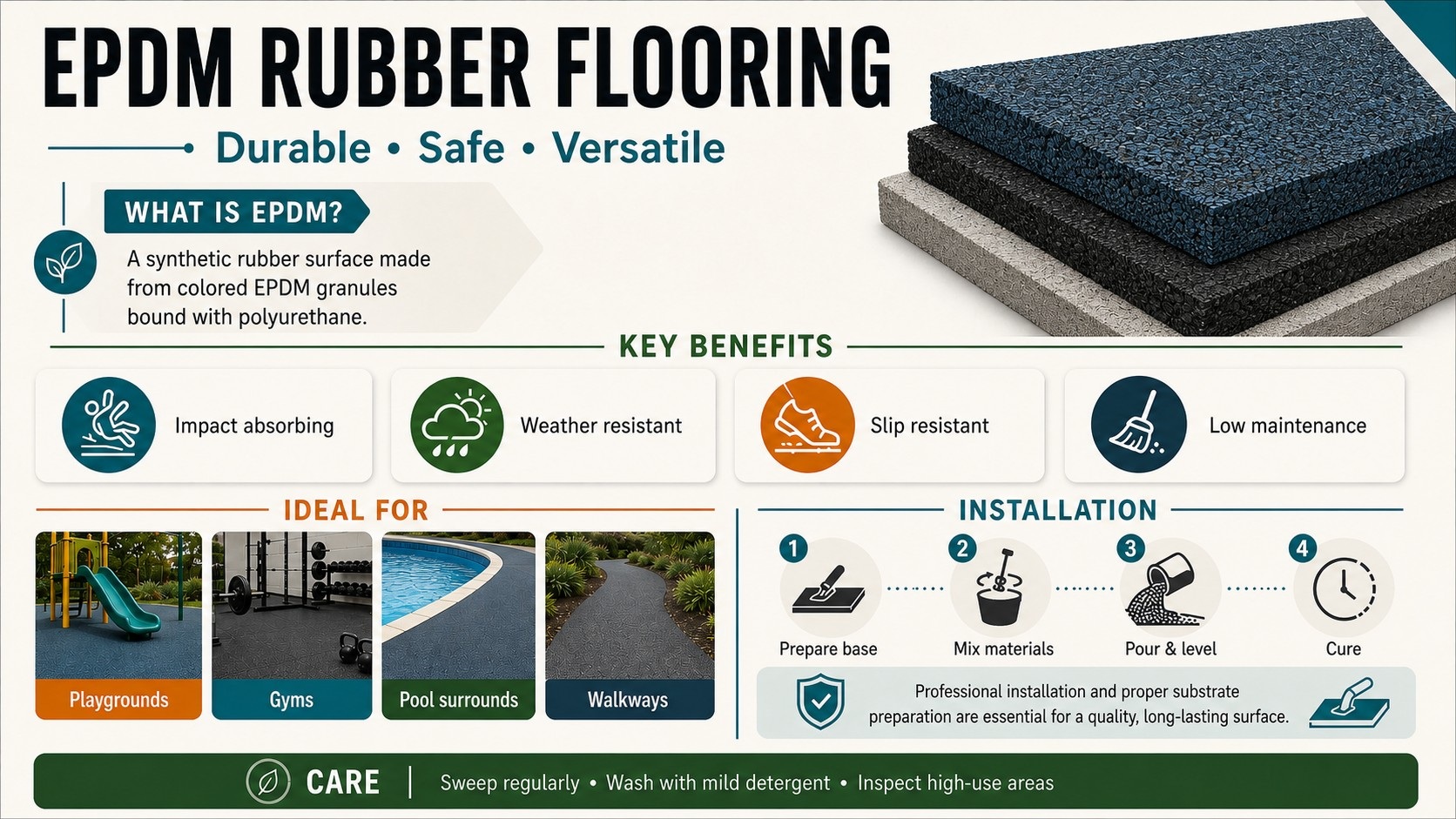
EPDM (ethylene propylene diene monomer) flooring is a resilient rubber surfacing system designed for areas that need comfort, durability, safety, and visual flexibility. It is commonly installed as a seamless wet-pour surface using colored EPDM granules mixed with a polyurethane binder. Depending on the application, the wearing layer may be installed over a shock-absorbing rubber base and a prepared concrete, asphalt, or engineered sub-base.
Why Choose EPDM Flooring?
- Impact absorbing: A resilient surface can help reduce the severity of impacts and improve comfort underfoot. For playgrounds, the total system thickness must be selected for the equipment's required critical fall height.
- Weather resistant: EPDM performs well outdoors and offers good resistance to sunlight, rain, and temperature changes when correctly specified and installed.
- Slip resistant: Its textured, seamless finish can provide dependable traction, although drainage, cleaning, and site conditions remain important.
- Design flexibility: Granules are available in many colors and can be combined to create patterns, zones, pathways, logos, and wayfinding features.
- Low maintenance: Routine sweeping, occasional washing, and prompt attention to damage are generally sufficient to keep the surface looking and performing well.
Typical Applications
EPDM flooring is widely used in playgrounds, gyms and fitness areas, pool surrounds, recreational spaces, school grounds, walkways, terraces, and other indoor or outdoor environments where a resilient decorative surface is required.
Installation Overview
A successful installation begins with a stable, clean, dry, and properly prepared base. The rubber granules and compatible binder are mixed in controlled proportions, poured in place, leveled, and hand-troweled to the specified thickness. The surface must then be protected while it cures. Drainage, weather conditions, binder selection, edge details, and substrate quality all affect the finished result, so professional installation is recommended.
Care and Maintenance
Remove loose dirt and debris regularly. Wash the surface as needed with water and a mild, manufacturer-approved detergent, avoiding harsh solvents and aggressive tools. Inspect high-use areas, edges, seams, and drains periodically, and repair cuts or localized damage early to prevent deterioration.
Specification Note
The correct build-up depends on the intended use, substrate, climate, drainage, traffic level, and applicable safety or accessibility requirements. Slip resistance and impact performance are properties of the complete installed system, not the EPDM granules alone. Product data, test reports, warranties, and installation guidance should therefore be confirmed with the selected manufacturer and contractor.
Frequently Asked Questions
What is EPDM flooring?
A poured-in-place rubber surface with EPDM granules as the wearing layer, specified with a suitable base and compatible binder.
Where is EPDM flooring used?
It is commonly used for playgrounds, recreation areas, walkways and outdoor spaces needing a resilient, colour-customizable finish.
Can EPDM flooring be used outdoors?
Yes, when the materials, substrate preparation and drainage are selected for the site and manufacturer guidance.
How thick should EPDM flooring be?
There is no single thickness for every project. Selection depends on use, substrate and any impact-performance requirements.
How should EPDM flooring be maintained?
Remove debris, clean according to the manufacturer’s guidance, and periodically inspect edges, drains and high-use areas.
Does HKS Surfaces install outside Bangkok?
HKS Surfaces supports projects in Bangkok and throughout Thailand; scope is confirmed for each project.
Related surface systems
EPDM Granules · SBR Rubber Granules · Playground Safety Flooring · EPDM Rubber Safety Flooring for Water Parks & Splash Pads · Rubber Safety Tiles